
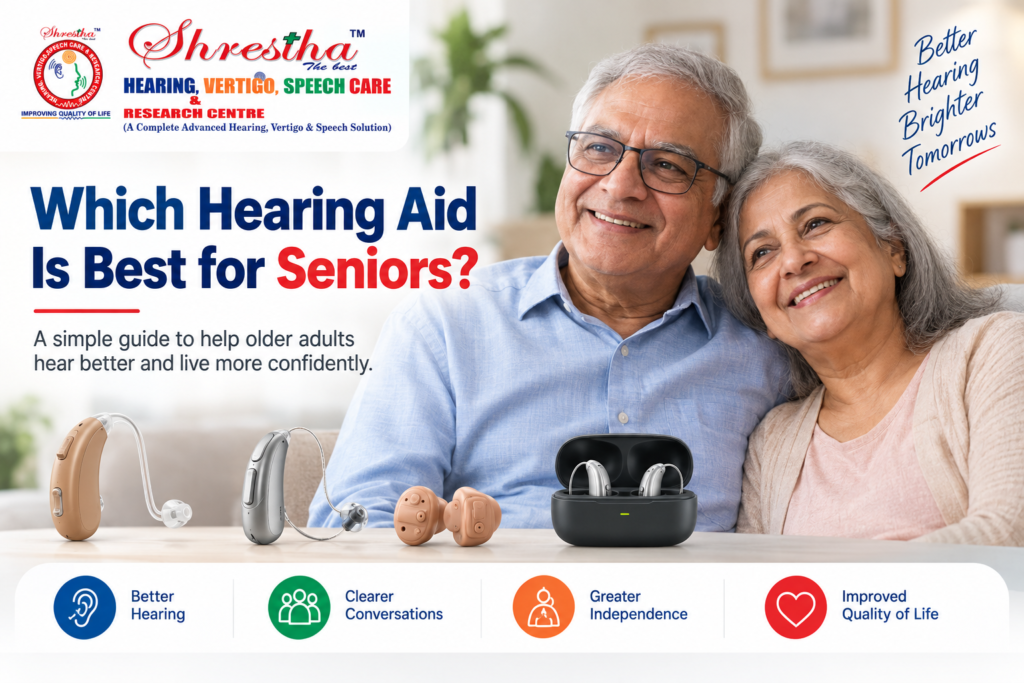
Which Hearing Aid Is Best for Seniors?
Medically Reviewed By: Dr. Swarup Bikash Mishra, Audiologist & Vertigo Specialist Shrestha Hearing, Vertigo, Speech Care & Research Centre, Bhubaneswar & Cuttack Reviewed for accuracy, last updated Feb, 2026
Quick Answer: There is no single hearing aid that is best for every senior. The right hearing aid depends on the person’s degree of hearing loss, lifestyle, comfort, dexterity, listening environments and preferences. Rechargeable RIC or BTE devices may be convenient for some older adults, while others may need different styles or higher power devices. A hearing test and professional fitting can help determine the appropriate option.
The best hearing aid for a senior depends on their degree of hearing loss, lifestyle, comfort, dexterity, listening environments and ability to handle the device. For many older adults, easy to use rechargeable RIC or BTE hearing aids can be practical options, but the right choice should always be based on a hearing evaluation and professional fitting, not a generic recommendation found online.
This guide walks through everything you need to know before choosing a hearing aid for yourself or an elderly parent, based on how we actually evaluate and fit patients at Shrestha Hearing, Vertigo, Speech Care & Research Centre.
What Is the Best Hearing Aid for Seniors?
There isn’t one hearing aid that is ideal for every senior, despite what Top 10 Hearing Aids lists on the internet often suggest. The right choice comes down to a combination of factors specific to the individual:
- Degree and type of hearing loss
- Whether one or both ears are affected
- Ability to handle small devices (dexterity, vision)
- Daily listening environments, quiet home vs. markets, temples, family gatherings
- Need for rechargeable batteries vs. disposable
- Speech understanding in background noise
- Bluetooth/connectivity requirements
- Budget
- Comfort and fit
- Availability of local follow-up support
A device that works beautifully for one senior can be the wrong fit for another, even with a similar degree of hearing loss, simply because their lifestyle, hands, or hearing environment are different. This is exactly why a proper hearing evaluation always comes before a product recommendation, not after.
What Should Seniors Look for in a Hearing Aid?
Easy to Use Controls
For many older adults, especially those with early memory changes or reduced fine motor control, the single biggest factor in whether a hearing aid gets worn is how easy it is to operate. Look for:
- Simple, single button or app based volume adjustment
- Easy insertion and removal without pinching small parts
- Simple, intuitive charging (drop in charging docks are far easier than battery door fiddling)
Rechargeable Battery
Tiny disposable hearing aid batteries (size 10, 312, 13) are notoriously difficult for seniors with arthritis, tremors, or low vision to handle. Rechargeable hearing aids remove this daily friction entirely, the device is simply placed on a charging dock overnight, much like a phone.
Good Speech Clarity
The real world test of a hearing aid isn’t how it performs in a quiet clinic room, it’s whether the wearer can follow:
- Family conversations at the dinner table
- Television without needing subtitles or high volume
- Phone calls
- Conversations in restaurants
- Religious gatherings and social events
Background Noise Management
Understanding speech in a quiet room is a very different task from understanding speech in a crowded wedding hall or market. Modern hearing aids use noise reduction and directional microphone technology to help separate speech from background noise, but the level of this technology varies significantly by price tier, which is worth discussing openly during your fitting.
Comfortable Fit
A hearing aid a senior finds uncomfortable is a hearing aid that ends up in a drawer. Comfort factors include:
- All day wearability without soreness
- Secure fit that doesn’t fall out
- Sensitivity of the ear canal (especially relevant for seniors with skin conditions or prior ear surgery)
- Overall device size relative to the wearer’s hands and vision for handling
Bluetooth Connectivity
Bluetooth hearing aids can stream phone calls, television audio and music directly into the device. This is a genuine convenience for many seniors, but it is not a requirement for everyone. Some patients have no interest in streaming and prioritize simplicity instead. Don’t let a feature list decide this for you, let your lifestyle decide.
Which Type of Hearing Aid Is Best for Seniors?
| Hearing Aid Type | Suitable For | Advantages | Considerations |
|---|---|---|---|
| RIC (Receiver in Canal) | Mild, severe hearing loss, depending on model | Small, comfortable, often rechargeable | Smaller components can be harder to handle for some |
| BTE (Behind the Ear) | Moderate, profound hearing loss, depending on model | Powerful, durable, generally easier to handle | More visible than smaller styles |
| ITE (In the Ear) | Mild, severe, depending on model | Custom molded fit | Can be harder for some seniors to insert/remove |
| ITC/CIC (In the Canal/Completely in Canal) | Selected mild, moderate losses | Very discreet | Small size makes handling and battery changes harder |
| Power BTE | Severe, profound loss | Higher amplification capacity | Larger device size |
There is no universal best style, the appropriate one depends entirely on your audiologist’s assessment of your hearing loss, ear anatomy and hand dexterity.
RIC vs BTE Hearing Aids for Seniors
This comparison comes up often in our clinic, since these two styles are the most commonly recommended for older adults.
RIC Hearing Aids RIC devices sit behind the ear with a thin wire running to a small receiver inside the ear canal. They tend to be:
- Smaller and more discreet than traditional BTE devices
- Available in rechargeable options
- A good fit for mild to severe hearing loss, depending on the model
- Slightly more fiddly to handle due to smaller components, a consideration for seniors with significant dexterity challenges
BTE Hearing Aids BTE devices house all components in a slightly larger case behind the ear, connected to the ear via a tube and earmold. They tend to be:
- More powerful, suitable for moderate to profound hearing loss
- Easier to grip and handle for seniors with arthritis or reduced fine motor control
- More durable for daily wear and tear
- Available in rechargeable options as well
Which One Should a Senior Choose? The decision depends on the hearing evaluation results, the amplification power required, ear canal anatomy, hand dexterity, and daily lifestyle. Neither style is better in absolute terms, they solve for different priorities.
Are Rechargeable Hearing Aids Better for Seniors?
Rechargeable hearing aids have become increasingly popular among older adults, and for good reason:
- What they are: Hearing aids with a built in rechargeable battery, charged via a docking station rather than replaced with disposable batteries
- Why they may be convenient: No tiny batteries to handle, no risk of a battery dying mid conversation without a spare on hand, and a simple end of day routine
- Charging routine: Typically an overnight charge provides a full day (often 18-24 hours depending on the model) of use, including some streaming time
- Battery backup considerations: Some models offer a quick charge option (e.g, 30 minutes of charging for several hours of use), useful for forgetful mornings
- Who may prefer disposable batteries: Seniors in areas with unreliable electricity access, or those who prefer having a physical backup battery on hand for travel
For most seniors with dexterity or vision limitations, rechargeable technology removes a genuine daily obstacle to consistent hearing aid use and consistent use is what actually determines whether a hearing aid improves quality of life.
Best Hearing Aid Features for Elderly Parents
If you’re choosing on behalf of an aging parent, this checklist covers the features that matter most in real world use:
- ☑ Easy to insert and remove
- ☑ Comfortable for long periods of wear
- ☑ Rechargeable option
- ☑ Automatic sound adjustment (adapts to changing environments without manual input)
- ☑ Strong speech clarity
- ☑ Background noise management
- ☑ Simple controls (or a caregiver-accessible companion app)
- ☑ Reliable local support for adjustments and repairs
- ☑ Clear warranty and service terms
- ☑ Professional fitting, not a self-fit device bought online
Which Hearing Aid Is Best for Seniors With Severe Hearing Loss?
Severity of hearing loss significantly narrows the appropriate options:
- Standard hearing aids are calibrated for mild to moderate hearing loss and may not provide sufficient amplification for severe or profound loss
- Power BTE or power RIC devices are typically considered for seniors with severe to profound hearing loss, as they’re built for higher amplification output
- When even powerful hearing aids don’t provide adequate benefit, an audiologist may discuss additional options, such as further diagnostic testing or, in select cases, cochlear implant evaluation
- Professional evaluation is especially critical at this level of hearing loss, self selecting a device without an audiological assessment risks both inadequate benefit and potential discomfort from improper fitting
We avoid recommending a specific model for severe hearing loss without a complete audiological assessment, since amplification needs vary considerably even within the same loss category.
Should Seniors Buy Hearing Aids Online?
| Factor | Online Purchase | Professional Clinic |
|---|---|---|
| Convenience | High | Requires an appointment |
| Hearing evaluation | Often skipped or minimal | Comprehensive, done in person |
| Individual fitting | Varies by provider | Professionally fitted to the ear and hearing profile |
| Follow-up adjustments | Depends on provider, often limited | Usually included |
| Family/caregiver support | Depends on provider | Can be provided directly, in person |
It’s worth noting the distinction between prescription hearing aids, which involve professional fitting and ongoing adjustment, and OTC (over the counter) hearing aids, which are generally intended for adults who perceive their hearing loss as mild to moderate and who are comfortable self-managing the device. For most seniors, particularly those with more significant hearing loss, dexterity limitations, or coexisting balance issues, professional evaluation and fitting typically leads to better real world outcomes than an unassisted online purchase.
How Much Do Hearing Aids Cost for Seniors in India?
There is no single correct price to quote here, because cost depends on multiple factors:
- Technology level/tier
- Hearing aid style (RIC, BTE, ITE, etc.)
- Brand and model
- One ear (unilateral) vs. both ears (bilateral)
- Rechargeable vs. disposable battery technology
- Bluetooth/connectivity features
- Professional fitting fees
- Included follow up visits
- Warranty length and coverage
How to Choose the Right Hearing Aid for an Elderly Parent
Step 1: Get a Hearing Test Everything starts here. A comprehensive hearing evaluation determines the degree and type of hearing loss, without this, any hearing aid recommendation is a guess.
Step 2: Discuss Daily Listening Needs Where does your parent struggle most, one on one conversation, television, phone calls, or noisy family gatherings? This shapes which features actually matter.
Step 3: Choose the Appropriate Hearing Aid Style Based on the hearing test results and lifestyle discussion, your audiologist will narrow the options to RIC, BTE, ITE, or another suitable style.
Step 4: Compare Important Features Rechargeability, ease of controls, speech clarity performance, connectivity needs and physical comfort should all be weighed together, not just the price tag.
Step 5: Get Professional Fitting and Follow-Up A hearing aid is not a set it and forget it device. Adjustments in the days and weeks after the initial fitting are often necessary as your parent adapts to amplified sound.
Common Mistakes Seniors Make When Buying Hearing Aids
Choosing Based Only on Price The cheapest option often lacks the noise management and clarity features that make daily use comfortable, leading to the device being worn rarely, if at all.
Choosing the Smallest Hearing Aid The most discreet device isn’t always the easiest to handle, especially for seniors with dexterity or vision limitations.
Buying Without a Hearing Test A device selected without a proper diagnostic evaluation is essentially a guess, regardless of how good the reviews are online.
Focusing Only on Brand Brand reputation matters less than whether the specific model matches the individual’s hearing loss profile and lifestyle.
Ignoring Comfort A hearing aid that’s uncomfortable to wear for a full day will end up unused, no matter how advanced its technology.
Buying Features They Don’t Need Bluetooth streaming, smartphone apps, and advanced noise programs add cost and value only if the wearer will actually use them.
Not Considering After-Sales Support Hearing aids need occasional cleaning, adjustment, and repair. Local, accessible support matters more over the life of the device than the initial purchase experience.
Expecting Hearing Aids to Restore Normal Hearing Hearing aids amplify and clarify sound, they don’t restore hearing to how it was before hearing loss began. Realistic expectations lead to far higher satisfaction.
Do Seniors Need Hearing Aids in Both Ears?
Whether bilateral (both ear) hearing aids are recommended depends on the hearing assessment:
- Hearing with both ears generally helps with sound localization (knowing where a sound is coming from) and understanding speech in noisy environments
- Bilateral fitting is commonly recommended when hearing loss affects both ears to a similar degree
- In some cases, such as asymmetric hearing loss or specific medical circumstances, a single hearing aid may be appropriate instead
This is a decision best made after a complete hearing assessment, not a blanket rule applied to every patient.
How Long Does It Take for Seniors to Get Used to Hearing Aids?
Adjustment is a gradual process, not an instant switch:
- Sounds may initially seem unusually loud, sharp, or different, this is normal as the brain re adapts to hearing frequencies it hasn’t processed clearly in some time
- Wearing time is often built up gradually, starting with a few hours a day
- Regular, consistent use accelerates adaptation far more than occasional use
- Follow up adjustment visits fine tune the settings as the wearer’s comfort and needs become clearer
- Family support and encouragement during this period meaningfully improves long-term hearing aid adoption
How to Help an Elderly Parent Use a Hearing Aid
- Teach them how to insert and remove the device correctly
- Show them the charging routine clearly, and consider a visible reminder or fixed charging spot
- Keep controls as simple as possible, avoid over complicating with unnecessary settings
- Help with regular cleaning and maintenance
- Encourage consistent daily use, especially in the early adjustment period
- Attend follow up appointments together when possible
- Keep the device stored safely when not in use, away from moisture and pets
When Should a Senior Get a Hearing Test?
Consider scheduling a hearing evaluation if you or your parent notice:
- Frequently asking others to repeat themselves
- Increasing the TV volume beyond what family members find comfortable
- Difficulty understanding conversation, especially in groups
- Missing phone calls or the doorbell
- Frequently feeling that others are mumbling
- Avoiding conversations or social situations due to difficulty following speech
Important: For sudden hearing changes, hearing loss in one ear, or hearing loss accompanied by dizziness or ear pain, seek prompt medical evaluation rather than simply purchasing a hearing aid, these patterns can indicate conditions that need clinical attention first.
Frequently Asked Questions
What is the easiest hearing aid for seniors to use?
Devices with simple, single button controls and rechargeable batteries, commonly RIC or BTE styles, tend to be the easiest for seniors to manage day to day, though the right choice still depends on individual dexterity and hearing needs.
Are rechargeable hearing aids good for elderly people?
Yes, for most seniors. They remove the difficulty of handling small disposable batteries and simplify the daily routine to a single overnight charge.
Is RIC or BTE better for seniors?
Neither is universally better, RIC devices are typically smaller and more discreet, while BTE devices are generally easier to handle and can provide more amplification power. The right choice depends on hearing loss severity and hand dexterity.
What is the best hearing aid for an elderly parent?
There’s no single best option, it depends on their hearing test results, lifestyle, dexterity, and comfort preferences. A hearing evaluation is the necessary first step.
Which hearing aid is best for severe hearing loss?
Power BTE or power RIC devices are typically considered for severe to profound hearing loss, based on an audiologist’s assessment.
Are hearing aids difficult for seniors to use?
Modern hearing aids, particularly rechargeable models with simplified controls, are considerably easier to use than older generations of devices, though an adjustment period is normal for most new wearers.
How much does a hearing aid cost for senior citizens in India?
Cost varies by technology tier, brand, style and whether one or both ears require fitting.
Should seniors wear hearing aids in both ears?
Often, yes, if both ears are affected similarly, but this depends entirely on the individual hearing assessment.
How long does it take to adjust to a hearing aid?
Most people need several weeks of gradually increasing use to fully adjust, with follow up fittings helping refine comfort and clarity.
Can hearing aids improve hearing in noisy places?
Modern hearing aids include noise-reduction and directional microphone technology that can meaningfully improve speech understanding in noise, though performance varies by technology tier.
Should I buy a hearing aid without a hearing test?
This isn’t recommended. Without a diagnostic hearing test, there’s no reliable way to match a device’s amplification and settings to the individual’s actual hearing loss.
Get a Hearing Assessment Before Choosing a Hearing Aid
Choosing a hearing aid starts with understanding your hearing. A comprehensive hearing evaluation helps determine the type and degree of hearing loss and guides the selection and fitting of the most appropriate device for your specific needs.
Looking for hearing aids for seniors in Bhubaneswar or Cuttack?
Book a hearing evaluation at Shrestha Hearing, Vertigo, Speech Care & Research Centre.
☛ Acharya Vihar, Sachivalaya Marg, Bhubaneswar, Odisha 751013 ☛ Dolamundai, Cuttack ☛ +91 97766-50514